
Mem
Self-organising AI notes
Mem captures notes and automatically links, tags and surfaces them, removing the manual database upkeep that workspaces like Notion require.
The AI-native workspace for notes and tasks
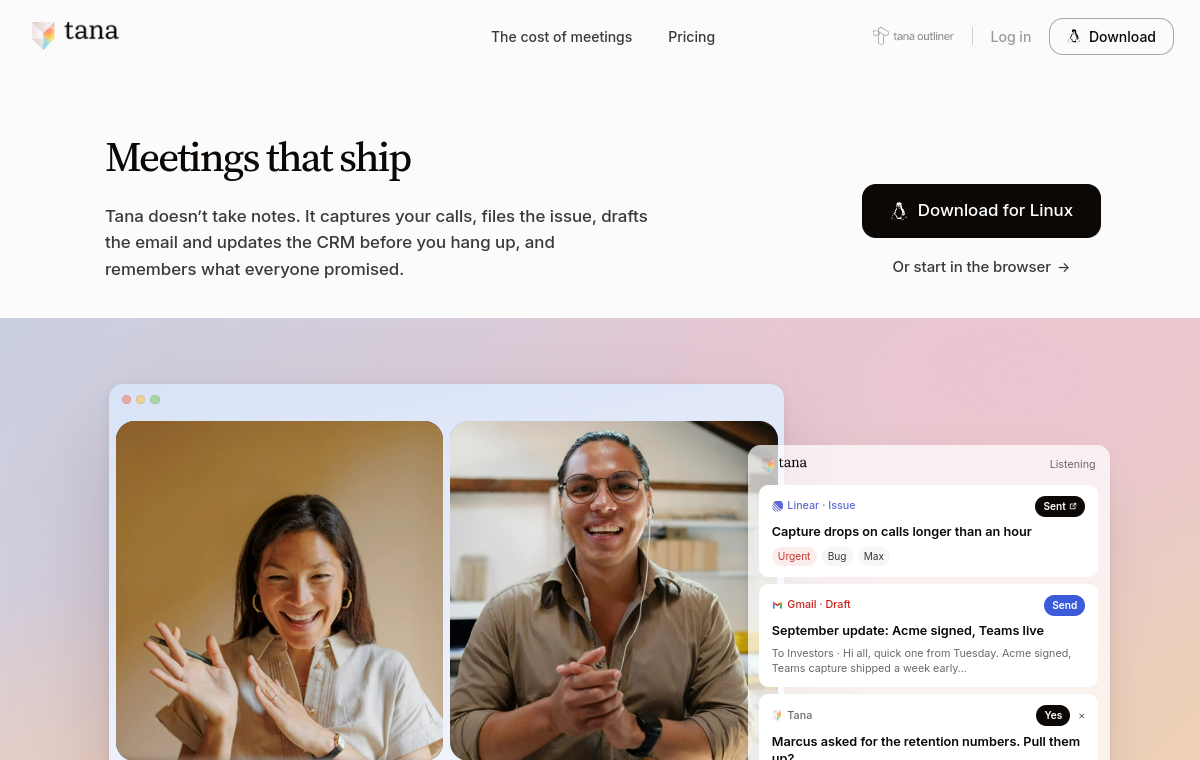
Tana is an outliner-based workspace using 'supertags' to turn notes into structured, queryable data, with built-in AI for search and content generation. It merges notes, tasks, and databases.

Self-organising AI notes
Mem captures notes and automatically links, tags and surfaces them, removing the manual database upkeep that workspaces like Notion require.
Writing and search assistant inside Notion
Notion AI drafts, summarises and answers questions across your workspace without leaving your notes. It also searches connected apps from one bar.
A knowledge base that works on local Markdown files
Obsidian stores notes as local Markdown files and lets users build a linked 'second brain' with backlinks and graph view. Plugins extend it with AI and other capabilities.
A second mind that organizes itself
mymind automatically tags and organizes saved links, notes, and images using AI, requiring no manual folders. It's designed as a personal, private second brain.
The note-taking app that thinks like you do
Reflect is a networked note-taking app with daily notes, backlinks, and built-in AI for summarizing and answering questions from your notes. It targets knowledge workers wanting a connected, AI-assisted second brain.
Classic note-taking and web clipping
Evernote popularised digital note-taking with web clipping, notebooks and powerful search. Many users have drifted away as pricing rose and the app slowed.